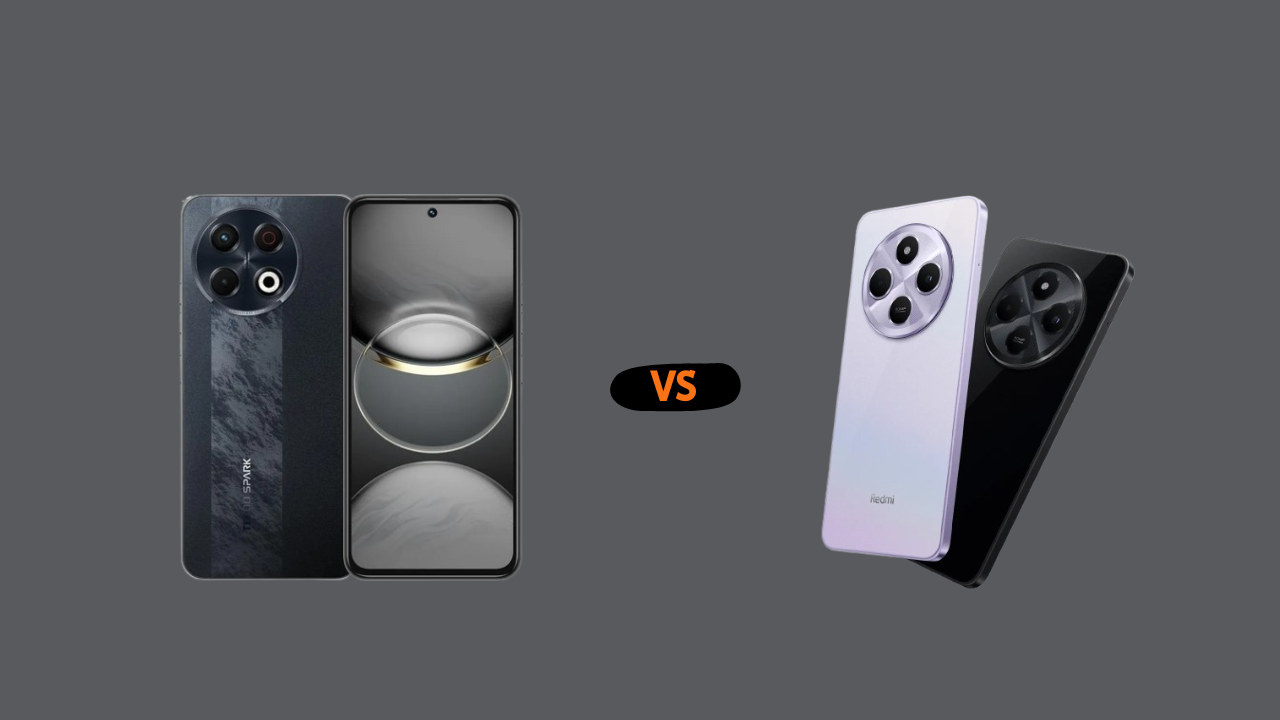
These two aren’t really competing for the same buyer, they’re two different answers to “how little can I spend and still get a decent phone.” The Redmi 14C is the floor. The Spark 30 Pro costs more and tries to justify that gap with a noticeably nicer display and smoother everyday performance.
The only question worth answering here is: does that gap actually deliver enough to matter, or are you just paying more for the same basic experience with better marketing?
Here’s what the extra money actually buys you.
The screen is where the price difference is most obvious
This is the clearest, most immediate gap between the two. The Spark 30 Pro’s AMOLED panel gives you deeper blacks, more accurate color, and a genuinely more premium feel, the kind of thing that makes the phone look and feel more expensive than it is the moment you turn it on. The Redmi 14C’s LCD panel is fine for basic use, smooth enough scrolling thanks to its refresh rate, but colors and contrast read flatter, and outdoor visibility under direct sun is just acceptable rather than strong.
If display quality is something you actually notice day to day, watching video, browsing social media, just looking at your phone, this is the single biggest reason the price gap exists, and it’s a real, felt difference, not a spec-sheet technicality.
Performance: one handles being pushed, the other handles the basics
Day to day, calls, browsing, social media, both phones get the job done. Where they split is the moment you ask more of them. The Spark 30 Pro opens apps faster, switches between them more smoothly, and generally performs above what you’d expect for its price. The Redmi 14C stays stable for genuinely light use, but multitasking or anything heavier starts to show its limits quickly, it was built for basic use only, and it doesn’t pretend otherwise.
Gaming tells the same story at a slightly larger scale. The Spark 30 Pro handles short sessions across 8+ tested titles smoothly, with some slowdown only showing up in longer, heavier sessions as things heat up. The Redmi 14C manages light games fine, but heavier titles bring noticeable lag and instability fairly quickly, this was never built with gaming in mind at all.
If you’re a light user who mostly needs calls, messaging, and browsing, the Redmi keeps up fine. If you multitask, game casually, or just want things to feel snappier, the performance gap is real and you’ll notice it within the first week.
Camera: both are “good enough,” one is a bit better
Neither phone is buying you a great camera, that’s just honest about this price bracket. The Spark 30 Pro edges ahead in daylight, with sharper, more detailed shots and better color reproduction, generally ready to post without editing. The Redmi 14C’s daylight shots are acceptable and pleasant enough for casual sharing, helped along by colors that are boosted a bit to look better than the detail underneath actually is. Both drop off in low light, with the Redmi falling off a bit more noticeably.
If camera quality matters even a little to you, that’s another point in the Spark’s favor, just not as dramatic a gap as the display difference.
Battery flips the script, the cheaper phone actually wins here
This is the one category where paying less gets you more, not less. The Redmi 14C’s lower performance demands translate directly into longer battery endurance, it comfortably outlasts the Spark 30 Pro through a full drain cycle, simply because it’s not working as hard. Charging is slow on the Redmi, but if you’re not someone who needs quick top-ups, that trade is easy to accept given how rarely you’ll need to charge in the first place. The Spark 30 Pro’s battery is still strong and lasts a full day with reasonably quick charging, it’s just not the standout advantage it is for the cheaper phone.
Price in Nigeria
As of May 2026, the Tecno Spark 30 Pro is available in Nigeria for around ₦299,999 – ₦330,000, depending on storage variant and where you buy.
| Retailer | Price Range | Notes |
|---|---|---|
| Jumia | ₦299,999 | Official store, warranty included |
| Konga | ₦299,999 | Online and in-store in Nigeria, nationwide delivery |
So, is the step up worth it?
If your needs are genuinely basic, calls, WhatsApp, light browsing, and battery life matters more to you than anything else, the Redmi 14C does exactly what it needs to and the extra money for the Spark buys you very little you’d actually use. But if you care about how your phone looks and feels, use social media heavily, or want performance that doesn’t strain under normal daily use, the Spark 30 Pro’s price premium is buying something real, mainly the display, secondarily the performance headroom, not just a bigger number on the spec sheet.
For most people who can afford the difference, the Spark 30 Pro is the better overall value. For anyone whose budget is the hard constraint, the Redmi 14C isn’t a compromise you’ll regret, it just knows exactly what it is.