Buying a budget phone usually means accepting a few compromises. Maybe the battery won’t last as long as you’d like, the performance starts slowing down after opening multiple apps, or maybe the camera only looks good when the natural lighting is perfect.
Well, the itel Power 80 doesn’t promise or try to solve every one of those problems. Rather, it focuses on getting the basics right, and for the people it’s built for, that’s probably the smarter approach. I wanted to find out if it could quietly handle everyday life without becoming frustrating a few weeks later.
I’ve also recently reviewed the itel s26 ultra, so moving over to the Power 80 made for an interesting comparison. Some differences were obvious, while others only became clear after living with the phone.
It Keeps Up With Everyday Life
The Power 80 runs on the Unisoc T7250, backed by up to 8GB of RAM with Memory Fusion. It’s not the sort of processor people brag about online, but it handled the things I actually used the phone for without creating unnecessary delays.
Chrome stayed responsive even with several tabs open, while switching between WhatsApp, Telegram, Spotify, and social media apps felt smooth enough that I rarely had to wait for the phone to catch up. Open enough demanding apps and you’ll eventually find its limits, but those moments never became part of my normal routine. By the end of the week, I wasn’t thinking about the processor anymore—I was simply using the phone.
You Stop Thinking About the Design Quite Quickly
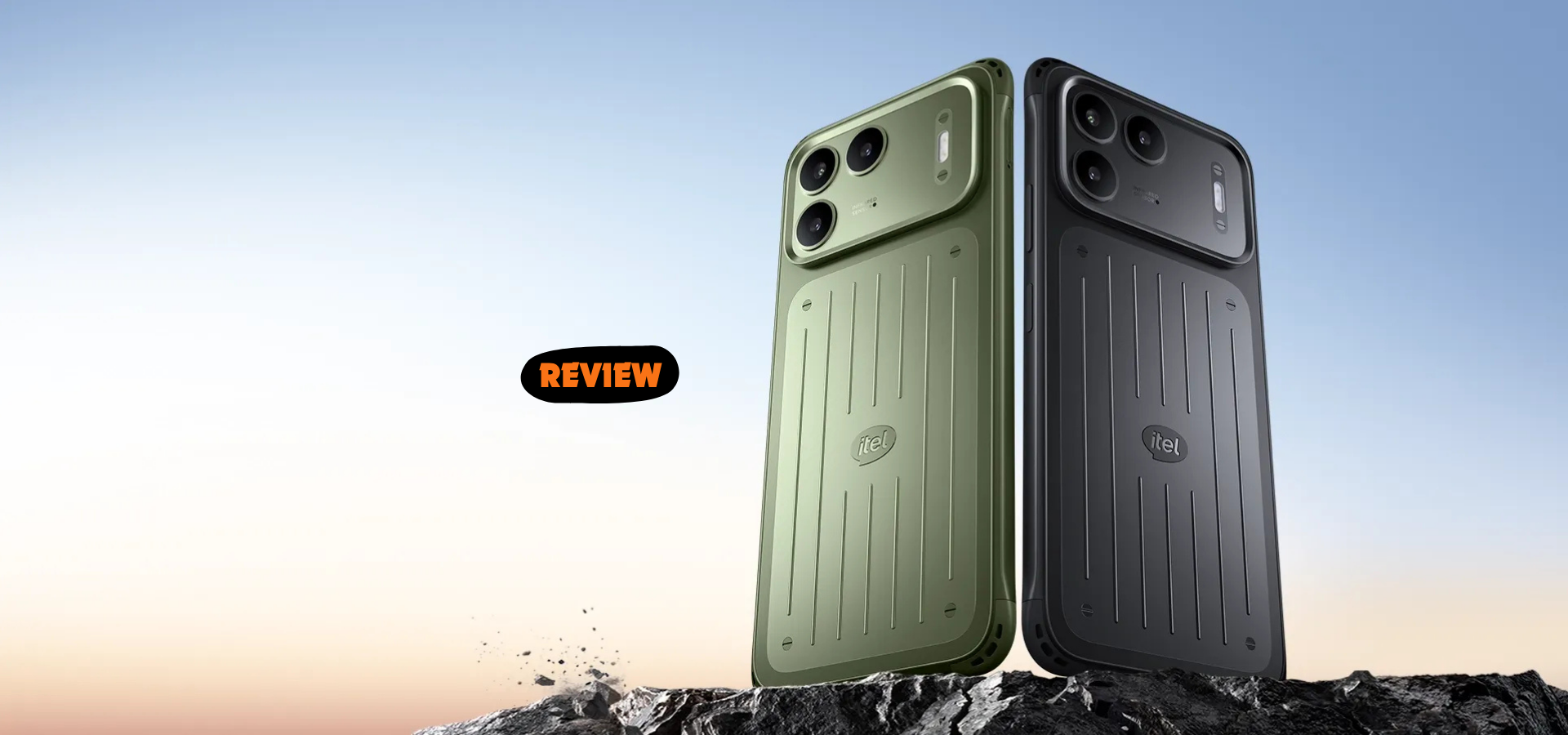
The first thing I noticed wasn’t the camera module or the colours. It was how normal the phone felt, and that’s meant as a compliment. Nothing feels exaggerated. The flat frame gives it a cleaner look, while the rear panel avoids the glossy finish that turns into a fingerprint magnet after a few minutes.
For a phone carrying a 7,000mAh battery, it also feels better balanced than I expected. It isn’t light, but it never became uncomfortable during longer periods of use. After the first day, I stopped paying attention to how it looked and simply picked it up whenever I needed it. For an affordable phone, that’s usually a good sign.
The Display Never Became a Problem
itel equips the Power 80 with a 6.78-inch HD+ IPS LCD and a 120Hz refresh rate, and I noticed the smoother scrolling almost immediately. Opening Facebook, Instagram, TikTok, or X feels more fluid than you’d normally expect at this price, and that alone makes the phone seem quicker than the specifications suggest.
The HD+ resolution won’t impress anyone shopping for a flagship, but that’s not really who this phone is for. Text is easy to read, YouTube videos look good, and browsing websites or replying to messages never felt like a chore. Could the screen be brighter outdoors? Sure. Did it ever stop me from using the phone? Not once.
Casual Gaming Feels Right at Home
If you’re hoping to play the latest mobile games at maximum graphics settings, you’ll need to spend more money. The Power 80 doesn’t pretend otherwise.
I spent time with PUBG Mobile, Call of Duty: Mobile, Free Fire, and Mobile Legends, and the experience was pretty much what I’d expect from a phone in this class. Lower graphics settings produce the smoothest gameplay, while lighter games run without much effort. The phone does warm up during longer sessions, but never enough to make me want to stop playing. It’s the kind of device that’s perfect for a few matches while you’re waiting for someone or relaxing in the evening, which is probably how most people will end up using it.
The Camera Won’t Replace a Flagship, But That’s Not the Point
The itel Power 80 comes with a 50MP rear camera and an 8MP front camera, and after using both for a while, I believe I understand what itel was aiming for.
Most people buying this phone aren’t trying to become photographers. They’re taking casual pictures of family, friends, food, documents, and the occasional sunset. For that, the main camera does a perfectly respectable job.
Photos taken during the day have enough quality detail to share on WhatsApp, Facebook, or Instagram without looking cheap. Colours are okay, but not to the point where everything looks artificial. Portrait mode is also better than I thought it to be, although it can occasionally miss parts of the hair or shoulders when the background gets busy.
Once the sun goes down, that’s where the camera starts showing its limits. You’ll notice softer details and more image noise, especially indoors, but that’s a compromise you’ll find on most phones around this price.
As long as there’s enough day light, the Power 80 produces photos that most people will be happy to keep.
Battery Life Became Something I Stopped Thinking About
The 7,000mAh battery is my favourite part of using this phone, because at no point did I feel like I needed to slow down just to save battery.
Most days, i followed the same routine. I replied to messages, spent time on social media, watched YouTube, listened to Spotify while travelling, checked Google Maps when I needed directions, and played a few games before bed, the battery sure held up well.
After a few days, I kind of realised I wasn’t checking the battery percentage anymore, like, i totally forgot about the battery. I’d simply use the phone and plug it in before going to sleep, which is exactly how I think and believe a good battery should work.
Charging is handled by 18W fast charging. It’s not the fastest around, but considering the huge size of the battery, I never felt like charging became a problem.
Who Will Get the Most Out of It?
Personally, I don’t think the itel Power 80 is trying to win over everyone because if you’re the type of person who plays heavy games every day, edits lots of videos, or wants flagship cameras, you’ll probably end up looking elsewhere.
But if your phone is mostly for the basics, like chatting, browsing, watching videos, taking photos, and getting through the day without worrying about battery life, the Power 80 makes a strong case for itself. It’s the sort of phone that suits students, parents, first-time smartphone users.
Price in Nigeria
As of June 2026, the itel Power 80 is available in Nigeria for around ₦170,000 – ₦230,000, depending on storage variant and where you buy.
| Retailer | Price Range | Notes |
|---|---|---|
| Jumia | ₦222,500 | Official store, warranty included |
| Pointek | ₦186,900 | Physical store in Lagos |
Prices fluctuate with exchange rates and stock availability, so treat this as a guide rather than a fixed number, check the retailer’s page directly before buying.
Finally, is the itel Power 80 worth buying?
Yes, it is worth buying. After spending time with the itel Power 80, I don’t think it’s a phone that needs flashy features to stand out.
It gets the important and basic things right. Of course the battery lasts, the display is okay to use, everyday performance is okay, and the camera is very much good enough for the moments most people actually capture.
So, for anyone shopping on a budget or looking for a good entry-level smartphone, that’s a combination that’s hard to ignore.