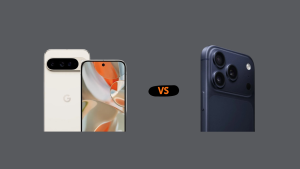
Google Pixel 9 Pro vs iPhone 17 Pro — Which AI Camera Phone Wins?
The Google Pixel 9 Pro and iPhone 17 Pro are two of the smartest flagship smartphones you can buy right now, but they approach photography and AI in completely different ways.
After comparing camera hardware, AI processing, software behavior, and real-world usage expectations, I noticed something immediately:
The Pixel 9 Pro feels like a phone built around computational photography and AI-assisted imaging, while the iPhone 17 Pro focuses more on consistency, natural video processing, and polished overall camera behavior.
Both are excellent, but they clearly target different types of users.
Let’s break it down properly.
Google Pixel 9 Pro — Full Real-World Experience
The Pixel 9 Pro feels like Google’s attempt to make the smartest possible camera phone rather than just the most powerful one.
Design and Build Quality
In real use, I noticed the Pixel 9 Pro feels compact and comfortable despite being a flagship device. The curved edges and softer design language make it feel less aggressive than many modern premium phones.
It doesn’t try too hard to look futuristic. Instead, it feels clean and practical, which actually makes it easier to live with daily.
The matte finish also helps reduce fingerprints, and overall, it feels lighter and easier to handle than most ultra-premium phones.
The unboxing and build overview of the Pixel 9 Pro shows a clean and refined design with a more compact flagship feel, while the matte finish and curved edges make the phone look comfortable and practical for daily use.
Display Experience
The 6.3-inch LTPO OLED display is excellent in daily use.
I noticed colors look balanced rather than exaggerated, and brightness remains strong outdoors. The smooth 120Hz refresh rate makes navigation feel very fluid, especially during scrolling and multitasking.
Google’s display tuning also feels slightly more natural compared to phones that heavily boost saturation.
Performance and Daily Usage
The Pixel 9 Pro feels fast in normal use, but what stood out more to me was how intelligent the software experience feels.
Features powered by Google AI and Gemini integration make the phone feel more context-aware during daily tasks. Voice typing, image editing, search features, and AI-assisted tools feel deeply integrated instead of just existing for marketing.
However, I also noticed the Pixel focuses more on “smart software experience” than raw benchmark power.
Compared to Apple’s chipset performance, the Tensor platform still prioritizes AI processing and optimization over maximum gaming performance.
Gaming Experience (Advanced Test)
In gaming, I noticed the Pixel 9 Pro performs smoothly in most situations, but it is clearly not designed as a gaming-first flagship.
Heavy gaming sessions can generate noticeable warmth faster than some competitors, and long-term frame stability is not as aggressive as dedicated performance-focused phones.
For casual and moderate gaming, it still performs very well.
The advanced gaming test shows the Pixel 9 Pro handling multiple demanding games smoothly at first, with stable responsiveness and good visual performance, though extended sessions gradually reveal more warmth as the workload increases.
Camera Experience (Basic Test)
This is where the Pixel 9 Pro becomes extremely interesting.
In real use, I noticed the phone relies heavily on computational photography and AI-assisted processing to create its camera style.
Photos often look more dynamic immediately after capture, especially in difficult scenes involving shadows, skin tones, or mixed lighting. Google’s HDR and image balancing remain among the best in the industry.
The Pixel also performs impressively with telephoto detail and zoom clarity. Some users even noted that Pixel telephoto shots look clearer than iPhone results in certain low-light situations.
What really stood out to me was the consistency of skin tones and scene interpretation. The camera often tries to preserve realism while still enhancing difficult parts of the image.
The basic camera test also highlights the Pixel 9 Pro’s zoom performance, showing clear detail retention at longer distances while still maintaining balanced colors and sharp everyday shots without needing much editing.
AI Camera Features
This is where the Pixel clearly pushes ahead.
Google’s AI editing and computational photography tools feel more mature and deeply integrated into the experience. Features like object removal, intelligent scene enhancement, AI-assisted editing, and image generation tools feel more useful in real daily usage.
The phone feels designed around the idea: “Take the shot first, improve it later intelligently.”
That approach makes the Pixel feel more experimental and creative.
Battery and Charging
Battery life is solid overall and comfortably lasts a full day under normal use. The larger battery capacity also helps during camera-heavy usage.
Charging speed is decent, though not class-leading.
iPhone 17 Pro — Full Real-World Experience
The iPhone 17 Pro takes a very different approach compared to the Pixel.
Instead of focusing heavily on AI experimentation, Apple prioritizes stability, refinement, and consistency across the entire experience.
Design and Build Quality
The iPhone 17 Pro immediately feels dense and premium in hand.
I noticed the titanium construction and tighter hardware design make it feel extremely solid. The phone feels more “precise” than playful, which matches Apple’s overall style.
It is slightly heavier than the Pixel, but the balance and build quality are exceptional.
The iPhone 17 Pro’s unboxing and build overview shows a very refined flagship design with a solid, premium in-hand feel, where the materials and tight construction immediately give it a durable and polished appearance from the first hold.
Display Experience
Apple’s OLED panel remains one of the most refined displays available.
In real use, I noticed animations feel smoother and more controlled than flashy. Colors are accurate, brightness is excellent, and the display remains easy to use under strong lighting conditions.
Apple’s approach feels less dramatic and more polished overall.
Performance and Daily Usage
This is where the iPhone feels extremely refined.
The A19 Pro chip delivers very stable performance under heavy load, and app responsiveness feels instant throughout the system.
What stood out to me is that the phone rarely feels unpredictable. Even during multitasking or intensive workloads, it maintains a smooth and stable experience.
Some Reddit users also mentioned the iPhone feels more efficient thermally and performs better in long-term stability compared to Pixel devices.
Gaming Experience (Basic Test)
Gaming performance is extremely strong.
In real use, I noticed the iPhone 17 Pro focuses more on sustained stability rather than aggressive peak numbers. Heavy games remain smooth for long sessions, and thermal behavior feels very controlled.
This makes the iPhone feel more reliable during extended gaming compared to the Pixel.
The basic gaming test shows the iPhone 17 Pro handling popular titles smoothly with consistent frame stability, delivering a very responsive experience across short sessions without noticeable performance dips.
Camera Test
The iPhone 17 Pro camera feels different from the Pixel immediately.
Instead of aggressively processing scenes, Apple focuses on natural rendering and consistency. Photos look cleaner and more balanced, especially when shooting people or moving subjects.
Video performance is still where the iPhone clearly leads.
Many users continue to point out that Apple’s video stabilization and overall video quality remain stronger than Pixel devices.
The iPhone also performs more consistently across different lighting situations without dramatically changing image style from shot to shot.
The camera test, including a side-by-side comparison with the iPhone 17, shows the iPhone 17 Pro delivering clean, balanced images with strong consistency across different scenes, producing natural-looking photos with accurate colors and stable exposure in both indoor and outdoor shots.
AI Camera Features
Apple’s AI approach feels more controlled compared to Google.
Features powered by Apple Intelligence exist throughout the system, but Apple integrates them more subtly into the camera and editing workflow.
The result is a more polished experience, but less experimental and flexible compared to the Pixel.
The Pixel feels smarter creatively.
The iPhone feels smarter operationally.
Battery and Charging (Drain Test)
Battery life is extremely efficient despite the smaller battery size. Apple’s optimization allows the phone to maintain strong endurance in daily use.
Charging speed still trails many Android competitors, but stability and battery management remain excellent.
The battery and charging drain test, including a comparison with the iPhone 17 Pro Max, shows the iPhone 17 Pro maintaining steady battery usage throughout the session, with a gradual and controlled drop in percentage without any sudden dips during continuous use.
Direct Comparison — What Actually Matters
| Category | Winner |
|---|---|
| AI Photography | Pixel 9 Pro |
| Video Recording | iPhone 17 Pro |
| Gaming Stability | iPhone 17 Pro |
| AI Editing Tools | Pixel 9 Pro |
| Thermal Efficiency | iPhone 17 Pro |
| Computational Photography | Pixel 9 Pro |
| Ecosystem Integration | iPhone 17 Pro |
| Camera Creativity | Pixel 9 Pro |
| Overall Consistency | iPhone 17 Pro |
Which One Should You Buy?
Choose the Google Pixel 9 Pro if:
- You care about AI photography features
- You enjoy computational photography
- You edit photos frequently
- You want smarter image-processing tools
- You prefer Android flexibility
Choose the iPhone 17 Pro if:
- You care about video quality
- You want stronger gaming stability
- You prefer polished optimization
- You are already in the Apple ecosystem
- You want long-term consistency
FAQ
Which phone has the better AI camera?
The Google Pixel 9 Pro offers more advanced AI-assisted photography and editing tools.
Which phone records better videos?
The iPhone 17 Pro still delivers more stable and polished video recording overall.
Which phone is better for gaming?
The iPhone 17 Pro performs better in sustained gaming sessions.
Which phone takes more natural photos?
The iPhone 17 Pro generally produces more natural and balanced images.
Which should I buy in 2026?
Choose the Pixel if AI photography matters most. Choose the iPhone if you want a more refined all-round flagship experience.
Conclusion
After comparing both phones deeply, I noticed neither phone is objectively “better.”
The Pixel 9 Pro feels like the smarter creative camera phone.
The iPhone 17 Pro feels like the more refined and balanced flagship overall.
If AI photography and image editing matter most: Pixel 9 Pro wins.
If consistency, video quality, and long-term stability matter more: iPhone 17 Pro wins.
The real answer depends entirely on what kind of smartphone experience you actually want.