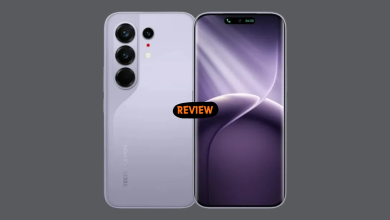
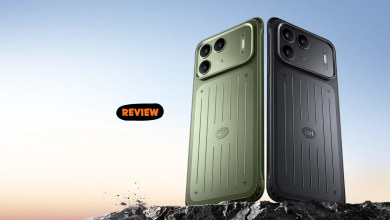
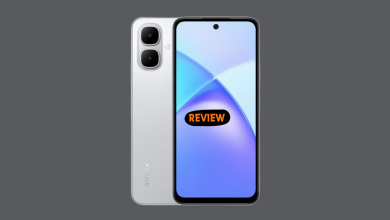
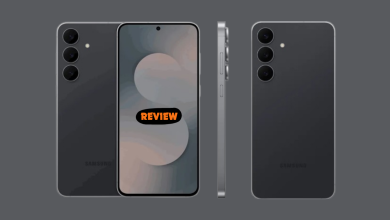
Nothing doesn’t market this phone the way most midrange brands do. There’s no “flagship killer” language, no chase-the-benchmark pitch, the whole premise is that design and software experience matter more than raw numbers. That’s a bold thing to promise, because it’s also an easy thing to fake. A transparent back and some LEDs can look like “experience” without actually changing how a phone feels to use every day.
So that’s the actual question I wanted answered after a month of daily use: is this genuinely a different experience, or just a different-looking phone with the same midrange bones as everything else at this price?
The design is the one place the brand’s promise is undeniably true
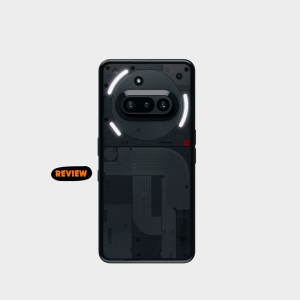
There’s no getting around it, this doesn’t look or feel like a typical midrange phone. The transparent back and minimalist Glyph LED design give it a genuinely distinct identity next to a wall of Samsung, Tecno, and Redmi devices that all start to blur together. Held in hand, it feels well-balanced, not too heavy, with flat edges that stay comfortable through long sessions. It’s not a flagship build, but the design language alone gives it a premium impression that has nothing to do with spec-sheet numbers.
The Glyph lighting itself is more personality than utility, a nice touch for notifications and charging status rather than something you’d call essential. But it’s honest about what it is: a design flourish, not a gimmick pretending to be a feature.
Software is where “experience over specs” actually gets proven
This is the part of Nothing’s pitch that turns out to be real, not just marketing. Nothing OS feels genuinely clean and lightweight next to most Android skins, minimal bloatware, consistent and well-optimized animations, an experience that sits close to stock Android but with its own added character. Day to day, this is honestly the most enjoyable part of owning the phone, and it’s the clearest evidence that the brand’s whole “experience first” positioning isn’t just a way of avoiding a benchmark fight, there’s a real, felt difference here.
Everyday performance backs up the claim, even if it can’t chase power
Running a midrange Snapdragon chip, the phone is clearly built for stability over raw speed, apps open quickly, multitasking stays smooth for normal use, and nothing about regular browsing, messaging, or social media use introduces lag. Push it into heavy multitasking or demanding workloads and it holds up fine without being aggressive about it, this was never trying to be a performance phone, and it doesn’t pretend otherwise.
Gaming follows the same shape. PUBG Mobile, Call of Duty Mobile, and Asphalt all run smoothly at medium settings with consistent frames in shorter sessions; longer sessions bring mild performance scaling as the phone manages heat. Plenty for casual play, not built for sustained competitive sessions, which tracks with everything else about how this phone positions itself.
The camera is honest, not ambitious
Daylight photos come out clean, sharp, and well-balanced in color, without the heavy over-processing some competitors lean on, results look more natural, if not the most dramatic straight out of the camera. Portraits hold up decently, with good edge detection and skin tones that stay realistic. Low light is where the camera gets noticeably conservative, softer images, less detail, but still usable for casual sharing rather than unusable.
Reliable rather than spectacular is the honest way to put it, which, again, fits the phone’s overall priorities rather than undercutting them.
Battery just does its job, without extreme charging speed to brag about
A full day of moderate use, social media, browsing, light gaming, goes by comfortably, with power efficiency that feels genuinely well optimized rather than merely adequate. Charging is decent but not the fastest in its class; Nothing seems to be prioritizing battery health and stability over chasing ultra-fast charging numbers, which is a reasonable tradeoff if you’re not someone who needs a five-minute top-up.
Price in Nigeria
As of May 2026, the Nothing Phone (3a) is available in Nigeria for around ₦550,000 – ₦750,000, depending on storage variant and where you buy.
| Retailer | Price Range | Notes |
|---|---|---|
| Jumia | ₦580,000 | Official store, warranty included |
| JustFones | ₦630,000 | Physical store in Lagos |
So, hype phone, or the real thing?
After a month, my honest read: the “experience over specs” pitch isn’t marketing spin here, it’s actually true, but only in the two places that matter most, design and software. Performance, gaming, camera, and charging are all solid-but-unremarkable midrange territory, and Nothing isn’t pretending otherwise.
If what you want is a phone that looks and feels genuinely different to use every day, and you’re fine with performance that’s dependable rather than powerful, this one delivers on its own promise. If you came expecting the design to be a mask for flagship-level specs underneath, that’s not what this is, and it never claimed to be.