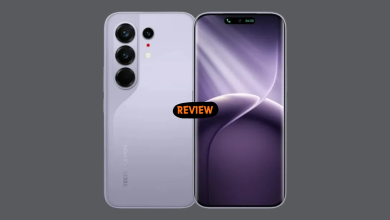
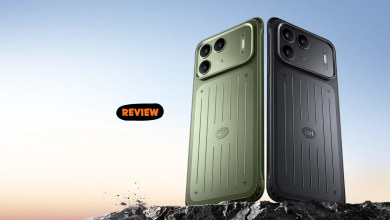
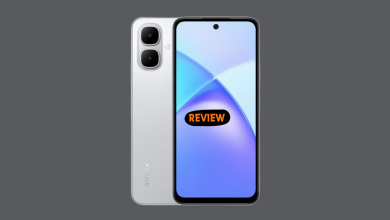
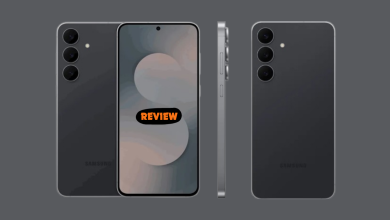
“Super 26 Ultra” sounds like a flagship. It isn’t one, and once you stop expecting it to be, this phone actually makes a lot of sense.
I spent a week with it to figure out where the gap between the name and the reality actually sits. Short answer: itel has clearly stopped trying to just build cheap phones and started trying to build phones that look expensive, even where the performance underneath doesn’t fully back it up.
Whether that’s a win or a letdown depends entirely on what you were expecting when you read “Ultra” on the box.
It looks like a flagship until you touch the back panel
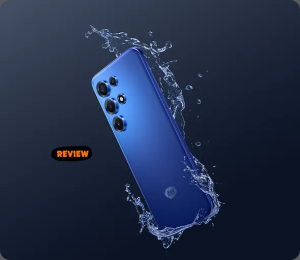
The design is doing a lot of work here. A curved AMOLED display, slim body, and clean rear camera layout give it a genuinely modern, premium-looking identity, and despite packing a 6,000mAh battery, it stays slim and comfortable in hand, with the curved edges actually helping during long scrolling or viewing sessions.
Then you feel the back panel. It’s plastic, and even with a polished finish, it doesn’t have the cold, dense feel of glass or metal. The design fools you at a glance and gives itself away the moment you’re paying attention. Premium first impression, budget reality on closer inspection, that tension basically defines this entire phone.
This is the one area where the phone doesn’t just look expensive, it behaves that way too. The 6.78-inch curved AMOLED at 144Hz is smooth, vibrant, and genuinely enjoyable to scroll and watch content on. Colors are punchy without tipping into unrealistic, and brightness holds up fine both indoors and in normal outdoor conditions.
If you had to guess where itel put most of its budget toward that flagship feel, it’s here. This is the strongest, most convincing part of the phone.
Performance is stable, not powerful, and that’s clearly the point
The Unisoc T7300 inside isn’t a flagship chip, but it’s a real step up for itel’s lineup, and daily use reflects that. Apps open at a reasonable pace, multitasking holds up, and general navigation feels consistent, nothing here is designed to impress with speed, but it doesn’t stumble in ordinary use either.
Push it harder, heavy multitasking, demanding apps, sustained load, and the ceiling of a midrange chip shows up. It doesn’t break down, it just stops feeling capable of more. Gaming follows the same logic: across more than 8 titles tested, lighter games ran smoothly and mid-level games held up fine at moderate settings in short sessions, but longer sessions triggered visible performance balancing, almost certainly thermal management rather than the chip simply giving out. Playable, not built for anything competitive or extended.
A 50MP main sensor with basic auxiliary lenses delivers exactly what you’d expect from that description. Daylight shots are sharp enough for social posting, with boosted colors and decent dynamic range, this camera is tuned to make photos look appealing, not to reproduce the scene faithfully. Portrait shots work reasonably well, with edge detection that’s usable if not always precise. Low light is the predictable weak point, detail drops and images soften, in line with what most phones in this category do.
If you’re posting to Instagram, it does the job. If you care about accuracy, it’s not built for that conversation.
Battery is the other place this phone genuinely earns its keep
The 6,000mAh battery easily clears a full day, often stretching further under light use, helped along by an efficient processor that keeps drain controlled during normal tasks. The discharge curve is steady and predictable rather than erratic, which matters more in practice than the raw capacity number does.
The one letdown: 18W charging feels slow for a battery this size. Strong endurance, unremarkable top-up speed.
Software stays out of the way, for better and worse
itel OS 15 on Android 15 is minimal and easy to navigate, with noticeably less visual clutter than some heavily skinned Android interfaces, good news if you value simplicity over deep customization. The tradeoff is that it doesn’t feel particularly advanced or deeply optimized either. It gets out of your way rather than trying to impress you.
Price in Nigeria
As of May 2026, the itel Super 26 Ultra is available in Nigeria for around ₦250,000 – ₦300,000, depending on storage variant and where you buy.
| Retailer | Price Range | Notes |
|---|---|---|
| Jumia | ₦256,950 | Official store, warranty included |
| Pointek | ₦291,600 | Physical store in Lagos |
So, is the “Ultra” name a problem?
Only if you take it literally. Judged as a flagship, this phone disappoints immediately, the performance simply isn’t there. Judged as what it actually is, a design-first midranger with a genuinely great screen, excellent battery life, and stable (not fast) everyday performance, it holds up well and represents real value.
If you understand what you’re buying going in, the Super 26 Ultra makes a lot of sense. If the name convinces you to expect flagship performance, you’ll be disappointed within the first week, same as I nearly was.